Tuesday, June 15, 2010

The English Explorers


Although Captain James Cook is the most famous of the English sailors to have landed in Australia, he was not the first. Cook’s 1770 voyage was preceded by that of the British ship the Triall, or Tryell, which in 1622 was wrecked on rocks that were probably to the north of the Monte Bello Islands, Western Australia. A number of survivors made it to Batavia (Jakarta) and described their harrowing experience, although their directions failed to turn up the rocks that caused the wreck, or the ship itself. In 1681 the London also approached New Holland’s west coast, but there is no evidence it landed near where the captain was able to draw the Abrolhos Islands, the location where the Batavia mutineers had held their rebellion in 1629.

Almost 100 years prior to Cook, in 1688, the Englishman William Dampier, often described as a reluctant pirate or buccaneer but also acknowledged as a knowledgeable naturalist (Wood 1969, Kenny 1995), was sailing with a group of pirates who had snatched the Cygnet and left its captain behind on a stopover in the Pacific. After visiting Southeast Asia, the pirates needed to avoid both Dutch and English ships and thus sailed to the east of the Philippines, south into Indonesia, and finally to Timor, where they turned south and landed in Australia (Wood 1969, 220).

In 1699 after the publication of a best seller based on his first journey, Dampier set sail again for the South Pacific, this time with the backing and legitimacy of the English Admiralty and Royal Society. Scientific exploration was the raison d’être of his mission, but what exactly he was expected to achieve was left vague: “He was told to discover ‘such things’ as might tend to the good of the nation and not to annoy the King’s subjects or allies” (Kenny 1995, 23).

His new ship, the Roebuck, sailed for New Holland at the start of 1699 and landed at Shark Bay, near Dirk Hartog Island, in July. He sailed north for about 994 miles (1,600 km) over the next five weeks, exploring all along the way. The results of this journey did not add significantly to what was known about the world at the time, as remained the case until 1770 when Cook finally made his way to the east coast of Australia, but did provide important descriptions of the continent’s unfamiliar plant and animal life, as well as judgmental descriptions of Aboriginal life (see Wood 1969, 221). Upon his return to Britain, Dampier penned his second best seller, A Voyage to New Holland, in which he described not only his Australian adventures but also time spent in New Guinea, Timor, and Brazil.

For 71 years between William Dampier’s second journey to New Holland and James Cook’s historic landing on the east coast, European activity in New Holland was extremely limited. Even the Dutch sent only two expeditions, in 1705 and 1756, which resulted in almost no new information about the imposing southern continent. After their final expedition, under Lt. Jean Etienne Gonzal, the VOC gave up on their large find in the South Pacific and left it to the Aboriginal people and occasional shipwreck victims.

This changed in 1768, when the British, following their victory over France and Spain in the Seven Years’ War in 1763, began thinking about expanding their colonial holdings and their scientific knowledge in the Pacific. James Cook’s first journey to New Holland in 1770 was motivated by these twin ambitions. His publicly stated task, given by the Royal Society, was to be in Tahiti on June 3, 1769, to observe the transit of Venus across the Sun, which previous British teams had failed to do during the transit of 1761.

The Royal Society, anxious to ensure its second attempt did not fail, approached the king and government with a request for £4,000 and a ship to send a scientific expedition to the South Seas for the express purpose of observing the transit. When the king agreed to the sum, the navy provided Lieutenant James Cook, who had had significant experience in North America, to command the ship HMB Endeavour and co-observe the transit with Charles Green, a Royal Society astronomer. The expedition was to observe the transit, chart new territory, gather as many specimens from the natural world as possible, and provide drawings, journals, and maps upon their return. As such the Endeavour carried a number of the best English scientific minds of the time, including Joseph Banks, an Oxford-trained botanist and later Cook’s good friend. Cook was also secretly directed by his superior officers to search the South Seas for sites that might yield financial gain, specifically in New Zealand, which had been “discovered” by Abel Tasman in 1642.

The expedition, by most accounts, was a success. As a result of the scientific explorations of Banks, Daniel Solander, and the others, about 1,400 new plant species and 1,000 animals were taken back to London. The one fairly significant failure on the scientific front, however, was the observation of the transit of Venus: Cook and Green’s observations differed by 42 seconds (Phillips 2008).

Despite the failure of the expedition’s stated mission, when Cook, Banks, and the others returned in 1771, they received a warm welcome in London due to their other accomplishments, scientific and other-wise. In political terms, certainly the most important was the claiming for England of New Zealand in 1769 and New South Wales in 1770. In New Zealand this event happened at Mercury Bay and in Australia at Possession Island, off the Cape York Peninsula, which Cook also named. Cook had actually landed on the eastern Australian coast four times, starting with Botany Bay, before he took possession of the land for King George III in August. In addition to New South Wales, Cook provided the newly “discovered” continent with many other placenames. The first was Point Hicks on the northern Victorian coast, named for the Endeavour’s first lieutenant, Zachary Hicks, the first to see this outcropping of land.


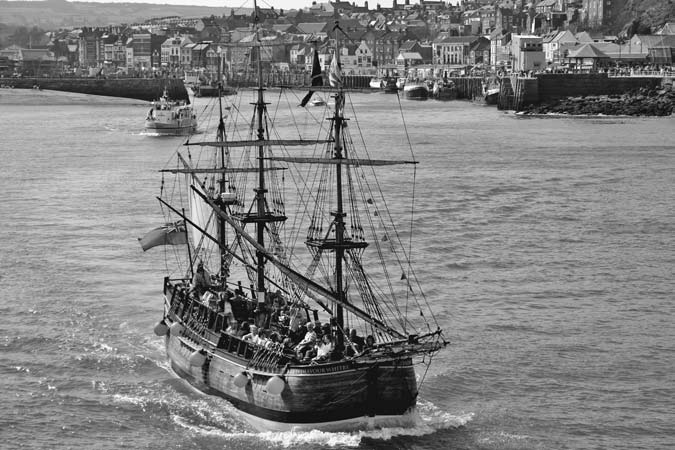
A replica of Captain James Cook’s ship HMB Endeavour, during his first voyage to Australia. Cook’s home harbor of Whitby, Yorkshire, England. (George Green/Shutterstock)

In addition to the vast number of scientific specimens and amount of knowledge they gathered, Cook and his crew provided the backdrop for Britain’s later colonization of its new possession. It was actually the ship’s head botanist, Banks, who in 1779 suggested to the Pitt government in London that Botany Bay might be a suitable place to deposit criminals who had been sentenced to transportation. The American colonies had been used for that purpose for many decades; about 50,000 people were sent there between 1650 and 1775 (Morgan and Rushton 2004). For a few years after the American Revolution stopped this practice, convicted felons in England served their sentences in the hulls of prison ships, until transportation began anew in 1788, commencing a whole new chapter in Australian history.

Before this initial settlement, however, in 1772 Cook and Captain Tobias Furneaux sailed again for the southern ocean to continue English exploration of the new continent. Although Cook never returned to Australian waters, Furneaux, in the HMS Adventure, used the opportunity to survey Van Diemen’s Land. While he explored much of the region, he was badly mistaken in his report to Cook that Van Diemen’s Land was connected to the New South Wales mainland. Cook had no reason to doubt his second in command and thus never returned to the region to investigate it for himself.

The last important English explorer of Australia’s unknown coastlines was Matthew Flinders. Together with his childhood friend Dr. George Bass and William Martin, Flinders began in 1795 by exploring the intricate coastline around Port Jackson in their tiny, six-foot boat, the Tom Thumb. Their expertise led the second governor of the new colony, John Hunter, to provide them with a real ship in which to clarify the status of Van Diemen’s Land as an island or peninsula. The three explorers returned to Port Jackson in 1798 having circumnavigated the island and thus were able to confirm its separation from the mainland. After journeying to England to gain support for his plan to circumnavigate Terra Australis, in 1801–02 Flinders was the first to chart the entire southern coast of the continent, from Cape Leeuwin in the far southwest, across the Bight, into Port Phillip Bay in Victoria, and north to Port Jackson. In July 1802 Flinders began his 11-month journey around the continent, which he called Australia, thus proving to all that New Holland and New South Wales were the same landmass. Unfortunately, after completing this journey, Flinders never returned to Australia again. On his way back to England he was held prisoner in Mauritius from December 1803 through June 1810 because of the Napoleonic Wars between Britain and France and died at the age of 40 after completing his massive work, A Voyage to Terra Australis, published just one day before his death in July 1814 (Cooper 1966).

Monday, June 14, 2010

The Dutch Explorers - Australia

In 1606 the Dutch sailor Willem Janszoon (sometimes abbreviated to Jansz) became the first European to document the existence of Australia. Between that first sighting and 1756, 19 Dutch ships were sent to Australia during the course of eight separate expeditions and a further 23 ships approached the continent while maneuvering to or from the Dutch colonies in the Indonesian archipelago (Sheehan 2008).

These expeditions were part of the larger mercantile and military exploits of the Verenigde Oost-Indische Compagnie, or United (Dutch) East India Company (VOC). The background for this exploration was geopolitical in nature. The 80 years’ war between Protestant Holland and Roman Catholic Spain and Portugal meant that the Dutch lost access to the exotic spices sold in the markets at Lisbon. Their answer to this problem was to seek their own path to the spice islands, resulting in their 1595 mission around the Cape of Good Hope and the eventual establishment of the very successful Dutch colony in what is today Indonesia.

One of the ships on that first mission in 1595 was the Duyfken, or “Little Dove,” which was to make history just seven years later as the first fully documented European ship to call in on the Australian continent, probably at the Pennefather River on the west coast of the Cape York Peninsula. The Duyfken on this fateful trip was captained by Willem Janszoon. His mission, when he set sail under a VOC flag from Bantam in West Java, was to find out whether great wealth in gold was actually to be found in New Guinea, as persistent rumors maintained (Kenny 1995). Besides gold he would also have been seeking other salable commodities, from spices to fur.

Although neither Janszoon nor other VOC sailors found much to recommend the Australian continent, which they called New Holland, they soon charted a significant amount of the coastline: 11,713 miles (18,850 km), or 52.5 percent of the continent, from as far south as Nuyts Archipelago on the Great Australian Bight, along the western and northern coasts to western Cape York. In 1642 they also claimed Tasmania, which they called Van Diemen’s Land in honor of the VOC governor-general who had commissioned Abel Tasman’s expedition. The landing party placed the flag of the prince of Orange on the shore but saw no indigenous Tasmanians. Tasman was vague about the borders of his country’s new colony, but for nearly two centuries the prior Dutch exploration of west Australia, still called New Holland, was respected by the other European powers, which turned their attention to the relatively unexplored east coast.

Although Tasman failed to make contact with the Aboriginal people, certainly other Dutch explorers did have interactions with them, of both a positive and a negative nature. Reports vary, but it can be stated with relative certainty that at least one Dutchman was killed when Janszoon’s crew went ashore at the Wenlock River on the Cape York Peninsula. Jan Carstenszoon, who landed on Australia’s west coast in 1623, even offered financial incentives to his crew for the capture of Aboriginal people, and a number of them were taken back to Dutch headquarters in Batavia (Jakarta) and Ambon, where their trail disappears. In 1629 the Dutch ship Batavia was wrecked off the west coast and two of the survivors were banished to the mainland for mutiny. The two were provided with food, guns, and a number of trade goods such as mirrors and beads and told to “learn what they could about the country” as the first recorded European inhabitants of Australia/New Holland (Kenny 1995, 26). They were never seen by Europeans again but must have interacted in some way with the local population.

European Exploration and Early Settlement (1606–1850)

The European “discovery” of Australia and the entire South Pacific region was part of the much larger process of European exploration and colonization throughout the world that began with Bartolomeu Diaz’s Portuguese expedition to the Cape of Good Hope at the southern tip of Africa in the 1480s and continues today in French New Caledonia and elsewhere. The earliest explorers were the Portuguese and Spanish, who were driven by the twin motivations of “God and gold” to seek new routes to the East and to expand the boundaries of the known world.

Despite the importance of Spain and Portugal in the Age of Exploration, there is only circumstantial evidence that explorers from those countries sailed as far south as Australia during this period. The one exception to this is Portuguese sailor Luis Váez de Torres, who sailed from Peru under the Spanish flag with Pedro Fernández de Quiros, European discoverer of the Solomon Islands. On their 1606 expedition Torres’s ship became separated from the others and wound up sailing through the strait between Australia and New Guinea only a short time after Janszoon’s historic landing on Cape York (Kenny 1995). There is little doubt that Torres saw the mainland, but he seems to have mistaken it for yet another island and failed to go ashore or report to the Spanish the existence of the legendary southern continent. Nonetheless, his charts did later end up in the library of Captain James Cook, who persisted in his long and difficult journey through the Great Barrier Reef in the hope that the information was accurate and that he could sail to the west between Australia and New Guinea. Today the strait explored by Torres bears his name in honor of his early achievement.


Language - Aboriginal culture

A third feature of Aboriginal culture that is evident today and indicative of great changes over the tens of thousands of years of Aboriginal residence in Australia is the clustering of all Aboriginal languages into two large groups, Pama-Nyungan and non-Pama-Nyungan, which is sometimes also called Arafuran (Clendon 2006). The former family includes the languages spoken in nine-tenths of the country’s geographic territory, from the rain forests of Queensland to the temperate regions of Western Australia and Victoria, including most of the arid center of the country. The latter category, however, contains 90 percent of the continent’s precolonial language diversity in just 10 percent of its territory (see map on page 14). Many theories have been put forward to explain both the prevalence of Pama-Nyungan throughout the continent, despite its relatively young age, estimated at about 5,000 years (O’Grady and Hale 2004, 91), and the great diversity of the non- Pama-Nyungan languages. Some of these theories include the separation of these two groups in antiquity and subsequent differentiation over time; others posit that an incoming migratory group introduced dingoes, new stone tool technology, and Pama-Nyungan languages several thousand years ago (Mulvaney and Kamminga 1999, 73–74). It is more likely, according to O’Grady and Hale, that a single population spread their language across nine tenths of the continent as a result of an unknown internal factor. Some hypotheses concerning this spread include innovations in intellectual property such as songlines, kinship structures, and art styles; developments in material culture; or natural causes (O’Grady and Hale 2004, 92).

As is evident from these few select cultural features and historical trends, even prior to the colonial period in Australia the continent housed a dynamic, diverse population that over many millennia had continually adapted to climate and social change. The Aboriginal Australians living in the far north of the country had also adapted to a trading regime, with fishermen and traders visiting their territory from the islands of contemporary Indonesia. Although the exact date of their first landing in Australia is unknown, the early 15th century is posited as the most probable time when fishermen from the north first arrived in large numbers. Macassan hunters of trepang began to interact with Aboriginal Australians two centuries later. The Chinese may also have landed in the far north, although it is possible that the Ming dynasty statue found near Darwin was carried by Macassans rather than Chinese sailors themselves.


Religion - Australian Aboriginal religion

Dreaming stories form the basis of Australian Aboriginal religion. They provide explanations for how and why the world is the way it is, which usually relate to the actions of ancestors who created the world. The world depicted in these stories is much more complex than that of most Westerners, for whom the natural and supernatural, past and present, sacred and profane are separate. For Aboriginal Australians, these planes of existence are intertwined. Ancient ancestors created the world and everything in it, including rocks, lakes, animals, humans, the wind, and rain, but are also active in the present. Their past actions cannot be separated from present actions, especially in ritual, which remakes the world each time it is undertaken. The song lines or footprints of these ancient ancestors continue to cross the Australian continent and carry information back and forth from one community to another. Sacred spaces along these lines coexist with everyday or profane spaces, often materialized in rocks, rivers, and other geological features. Because of this continual sacred presence and the association in English with sleeping, many Aboriginal people prefer not to use the term Dreaming to refer to their religious beliefs but instead rely on the term used in their own language. Anthropologists sometimes use “the everywhen” to refer to the context of Dreaming stories in order to indicate their timelessness (Bourke, Bourke, and Edwards 1998, 79).

As is the case with specific kinship structures, Aboriginal religion is another area of indigenous culture in which 19th-century concepts and ideas may not represent beliefs and practices that are as ancient as the Aboriginal population in Australia as a whole. As mentioned, there is little evidence for the rock art that depicts Dreaming stories in Australia prior to the post-LGM period. The archaeologist Bruno David takes this argument even further, claiming that modern Dreaming did not emerge until between 3500 and 1400 BP (2002, 209). He reminds us that “modern Dreaming stories cannot be used as evidence for the Dreaming’s great antiquity, despite the possibility that a story’s contents may represent traces of particular historical events passed down in folk memory” (2002, 91). That said, there is solid archaeological evidence that Dreaming has been the basis of Aboriginal Australian religion for several thousand years, affecting both belief and practice through the present.

Another feature of Aboriginal religion is the sacred or totemic nature of certain plants, animals, geographic features, and other aspects of nature, including the Moon. Each clan not only is represented by its totem but is said to embody and be descended from it. For example, members of the kangaroo clan are believed to have had the same ancestor as contemporary kangaroos; the same is true of the spinifex clan, witchety grub clan, and so on. As a result, these animals and plants are sacred to their particular groups, who must not hunt or eat them or use them for other profane purposes.

As do other religions, Aboriginal religion has a body of myth contained in its creation stories, rules and prohibitions to follow, and a series of rituals that bring the myths to life. Religious rituals, regardless of the tradition in which they originate, are about regularly enacting the sacred moments of the believers’ history. For example, Christians partake in communion to reenact the last supper, when the apostles gave life to Jesus despite the sacrifice of his body on Earth. Aboriginal rituals likewise reenact the most important moments in the lives of their sacred ancestors as a way of connecting past and present. Rituals also provide moments for younger Aboriginal people to learn from their elders the words to songs, the moves to dances, the beat to songs, and the power of the ancestors in the past and present world.

Culture

As is the case with so many features of precontact life there is contemporary debate about whether the conceptual and structural aspects of Aboriginal cultural life evident to Europeans in the 19th century were continuations from the past or relatively new adaptations to the colonial world. For example, Peter Hiscock believes that the complex Aboriginal kinship systems evident to Europeans at the end of the 19th century were the result of dramatic population loss from smallpox in 1789 rather than a continuation of precontact structures, while others, such as Ian Keen and Josephine Flood, disagree (Molloy 2008).

Kinship

While many aspects of Aboriginal life changed dramatically with the arrival of Europeans and the devastation of communities through disease and genocide, the evidence both from Australia and from band societies more generally is that although specific details of each kin structure may have changed, the centrality of kinship did not. The foundation of Aboriginal culture and society in the period before European contact had to have been kinship. All laws, residential patterns, taboos, and other aspects of communal life were dictated by kinship principles. Individual relationships, from food sharing requirements and other etiquette rules to potential marriage partners, were also dictated largely by kinship, in association with residency, which itself was largely directed by kinship. In the contemporary world this code remains very important, even for the majority of Aboriginal Australians who live in urban areas.

Rather than blood ties, the most important aspect of Aboriginal kinship systems is classification. In U.S.-American kinship there is a degree of classification, such as all children of your parents’ siblings are classified as cousins. This pattern is quite different from other kinship systems, in which the children of your mother’s siblings are called something different from the children of your father’s siblings; some systems are even more complex in that mother’s and father’s older siblings’ children are called something different from their younger siblings’ children. Aboriginal classification included not only cousins but everyone in the band or even tribe. For example, a father, his brothers, and his male lineal cousins are all called father; a mother, her sisters, and her female lineal cousins are all called mother. This does not mean that Aboriginal people did not know who their actual mother and father were, but that rights and responsibilities extended far beyond the nuclear family.

Classificatory kinship systems create very large webs of ties between individuals that cut across not only time but space. If two strangers of the same tribe meet, they immediately figure out how they are connected, as cousins, mother and child, father and child, grandparent and child, or whatever, so they are able to use the appropriate kinship term to refer to each other and to obey all the other taboos associated with kinship. One of the most interesting aspects of these kinship rules for many outsiders is the pattern of avoidance relationships many Aboriginal people are required to follow. The most common of these is the in-law avoidance relationship, in which men and women are not permitted to be alone in the room with their spouse’s parents, are not permitted to speak to them directly, and must never engage in joking or other lighthearted activity with them. While not all Aboriginal groups had these kinds of avoidance relationships between categories of relatives, many did and still do to this day.

Although Aboriginal Australians had one of the simplest tool kits of all the colonized peoples in the world, they may also have had some of the most complex structures to manage their webs of kinship. In many tribes each individual was a member of a family, lineage, clan, tribe, subsection, section, and moiety. Individuals had to manage different kinds of relationships with each person based on these categories, including joking and avoidance requirements, exogamy and endogamy rules, and obligations of social and economic reciprocity.

Prehistory: 22,000 BP–1605 c.e.


Sahul’s climate changed dramatically during the period of the last glacial maximal, between 22,000 BP and 17,000 BP. Average temperatures were quite a bit lower than previously, and dry winds made those temperatures feel even colder. Evaporation rates were higher than either today or in the previous period, and rainfall is estimated to have been about half of what it is today (Hiscock 2008, 58). This period was exceptionally difficult for humans in Sahul due to loss of food sources through extinctions, lack of water, and the cold. As a result of these changes, many pre-LGM settlements show no activity at all during this period; some of these sites are at Lake Eyre and the Strzelecki and Great Sandy deserts (Hiscock 2008, 60). These sites were probably so dry that even underground and other previously reliable water sources dried up and thus could not support life; another theory is that the areas around these sites became so dry that it was impossible for large groups to carry enough water with them to migrate into them.

Another feature of Sahul during the LGM was the final extinction of a large group of animals referred to as megafauna, including 10-foot-tall kangaroos and diprotodontids, which looked most like contemporary rhinoceroses but were marsupials rather than placental mammals. The cause of this extinction remains a contentious issue today with some scientists, such as Tim Flannery (1994, 2004), claiming a direct link between this mass extinction and the Aboriginal population’s hunting or land-use schemes, and others favoring a direct link between climate change and extinction. Stan Florek (2003) of the Australian Museum in Sydney is a proponent of the latter theory, who argues that temperature changes without any significant rise in moisture levels contributed to the drying out of the continent’s inland lakes and thus the death of the animals that relied on their water. Peter Hiscock (2008, 72–75) likewise draws on evidence from a variety of archaeologists, especially Judith Field’s work at Cuddie Springs, to argue for climate change as the source of not only LGM extinctions but also those of many other large marsupials between 200,000 BP and the LGM. Along with Hiscock, the present author cannot rule out that humans may have assisted in the extinction of some animals through either hunting or disrupting their natural habitats, but it seems clear that the earliest Aboriginal populations did not kill off Sahul’s megafauna.

After the end of the last glacial maximal about 17,000 years ago, conditions in Sahul began to change. These changes were not rapid by contemporary standards but over the course of thousands of years did force the human population on Sahul to make many significant adaptations. The most important cause of these changes was the rise in global sea levels, which over the course of 10,000 years eventually separated the Australian mainland from Tasmania and New Guinea. In addition to the loss of territory, climate change affected the continent in ways that are still not understood. Warmer conditions and an increase in carbon dioxide (CO2) in the atmosphere may have set the stage for more plant life. Greater rainfall may have opened up certain desert locations that had been abandoned during the LGM, while warmer temperatures may have caused this additional moisture to evaporate as soon as it fell.

While domestication of animals and plants was largely impossible in the Australian context because of a lack of suitable native species (Diamond 1999), post-LGM archaeological sites indicate other, significant changes in both social and material life for humans on the continent. Socially, the decrease in available territory caused by inundation contributed to higher population densities. This fundamental change, however, does not seem to have brought about any categorical change in social structure. Post-LGM Aboriginal societies remained bands, organized around the dual principles of kinship and residence and exhibiting all of the relative equality of their pre-LGM ancestors. Even in New Guinea, where population pressures about 9,000 years ago contributed to the domestication of plants and the development of a horticultural subsistence base, extensive redistribution systems eliminated differences in wealth almost as soon as they emerged and no formal leadership roles developed prior to the colonial era. The same was certainly true in Australia, where horticulture could not develop, making it impossible to accumulate large food surpluses.

The combination of higher population densities and climate change also caused many material changes to post-LGM Aboriginal life, especially the need for more intensive utilization of resources in each locality. For example, many of the chert tools and fragments found in pre-LGM and LGM era middens had been carried far from their original sources. For many archaeologists, this indicates greater mobility at that time due to the requirements of hunting and gathering in the cold, dry climate. This mobility also points to the ability of each band to roam far and wide without encroaching on the territory of other bands. In some post-LGM sites, most chert remains are found quite close to their source and thus indicate longer residence in each place and reduced mobility due to an increase in overall population (O’Connell and Allen 2004). However, these conclusions have been challenged by findings that some large stone tools, such as axes, were discovered farther from their original sites during the pre- and post-LGM periods than during that period, when dryness and cold may have prevented some migratory routes and camping sites from being used. Many post-LGM sites also indicate that trade relations increased in that period and thus gave each band access to a somewhat wider array of goods without their being forced to migrate.

Another important material change in the post-LGM context was the widespread creation of art and body decorations. Very few pre- LGM sites indicate the presence of red or yellow ochre or any other artistic media. All of the rock art for which Aboriginal Australians are famous, such as X-ray art of animals and dot paintings showing song lines and the footsteps of the ancestors, was created in the post-LGM period. Whether this material change is indicative of greater complexity in Aboriginal religious and ritual life at this time or another result of higher population densities and reduced mobility may never be known. A further possibility is that all pre-LGM rock art was destroyed by inundation or simply eroded over time. The fact that there are two possible examples of pre-LGM rock art in the Cape York Peninsula area of northern Australia in the form of ochre smudges on rock overhangs may provide evidence for this theory.


X-ray painting and dot painting are the two best-known forms of traditional Aboriginal art. This example comes from the Kakadu region of the Northern Territory. (Neale/Shutterstock)

After the LGM, Aboriginal people also began to make more widespread changes to their natural environment than they had prior to and during the LGM. The use of fire is one land management strategy that may have been practiced prior to the LGM but nonetheless became very widespread after it, as seen at a large number of post-LGM archaeological sites. As do contemporary Aboriginal people, these ancient ancestors may have used fire to locate and isolate animals for easier hunting as well as to promote the growth of vegetation, which would also have attracted animals. In addition to the use of fire to control plant growth, there is evidence that both plants and small animals were carried from place to place to encourage their growth in new habitats. Lack of suitable candidates for domestication, such as those that could have provided enough food effectively to replace hunting and gathering, however, meant that domestication of these plants never occurred. Indeed, even in the postcolonial context, the only native Australian plant to have been domesticated for widespread human consumption is the macadamia nut, and no native animal has been domesticated (Diamond 1999).

As have other aspects of the most ancient Aboriginal history, this hypothesis concerning greater control of the natural environment in the post-LGM period has been challenged. For example, some prehistorians have used evidence of heavily used stone axes in a few pre-LGM sites, combined with pollen studies indicating greater forest cover in central Australia prior to 60,000 BP, to argue that the first migrants to the country cut down large swaths of forest in that region. The argument is that the resulting lack of trees contributed to desertification, indicating very intensive interactions between pre-LGM populations and their environment (Groube 1989, Miller, Mangan, Pollard, Thompson, Felzer, and Magee 2005). This remains a contentious hypothesis that requires far more evidence than is currently available.

In addition to exerting their control over the land through the use of fire and over certain animals and plants, the post-LGM Aboriginal population in some locales dug channels and weirs for trapping fish and eels. These land management practices indicate not only a deep knowledge of the local environment but also, contrary to what the early British settlers thought, a strong commitment to particular parcels of land. While Aboriginal people did not have large food surpluses because of a lack of domesticable plants and animals that would have allowed them to build permanent towns and cities, they did not simply live in a state of nature. Each community owned the rights to use parcels of land and their resources and managed those parcels with complex strategies of burning, planting, animal transfers, and animal management.